Product
Motorised blinds & automation
A tubular motor inside the roll, controlled by remote, wall switch, phone app, schedule or sensor. On the wide, high glass typical of a Sandown tower, it's often the only practical option — and always the tidiest one.
Power options
- Rechargeable battery motors — no wiring, retrofit-friendly, charged every few months via a USB-style charger. This is the apartment default: no chasing concrete, no drilling into a structural slab, no electrician's site visit to schedule around building access.
- Wired 220V motors — for new builds or renovations where the electrics are already open. Permanent, no charging, and the right choice for big or heavy systems and exterior products.
- Solar trickle options exist for awkward positions with no easy power route at all.
Control layers — sold by lifestyle, not tech
- A handset remote — one remote, every blind.
- App control — blinds from the couch, or from the office if you're wondering whether you left the west blinds up.
- Schedules — bedroom blinds open with sunrise, west-facing blinds drop automatically in summer.
- Sun sensors that drop shading on the worst elevations, and wind sensors that retract exterior screens and awnings before a highveld storm arrives.
- Voice and smart-home integration for the automation-minded owner.
Battery motorisation is often the difference between an install that needs a building-wide electrical sign-off and one that doesn't. It avoids drilling into the structural slab or the outside face of the building, keeping the work inside your own unit and inside most schemes' rules on external alterations.
When motorisation is essentially required
Spans too wide or heavy for a chain, blinds above stair voids or double-volume glazing, concealed ceiling-recess systems, exterior venetians, awnings and zip screens, and any wall of glass where you'd rather press one button than wind six separate blinds by hand.
Safety and practical honesty
No dangling chain is the most child-safe operation there is. Quality motors run quiet, not silent, and carry multi-year guarantees. Battery motors do need that periodic charge — worth setting the expectation at quote stage rather than as a surprise six months in.
Battery motorisation is standard practice wherever we fit it — apartment schemes in Illovo, freehold houses with double-volume glazing in Morningside, complex-heavy pockets of Rivonia, and wide new sliding doors after a Hurlingham renovation.
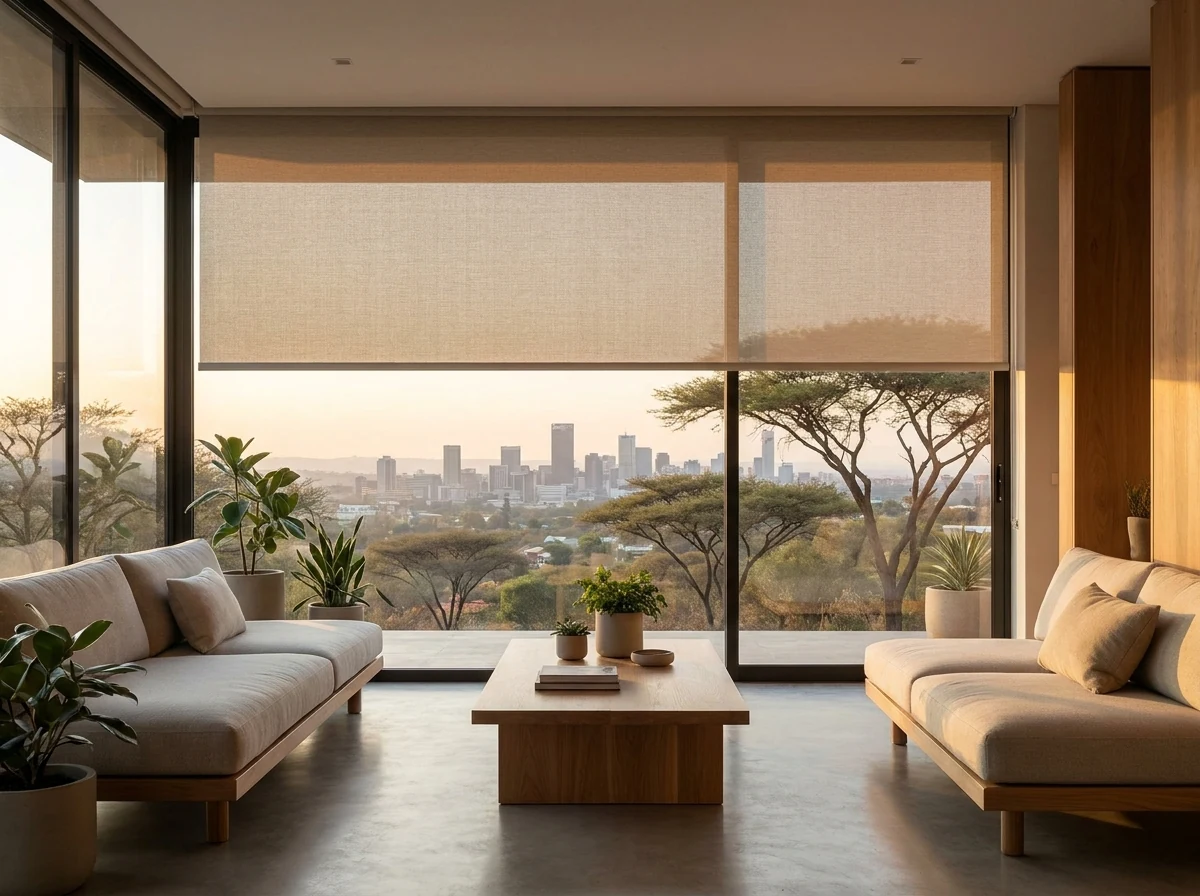
Roller blinds
The product most often specified with a motor.
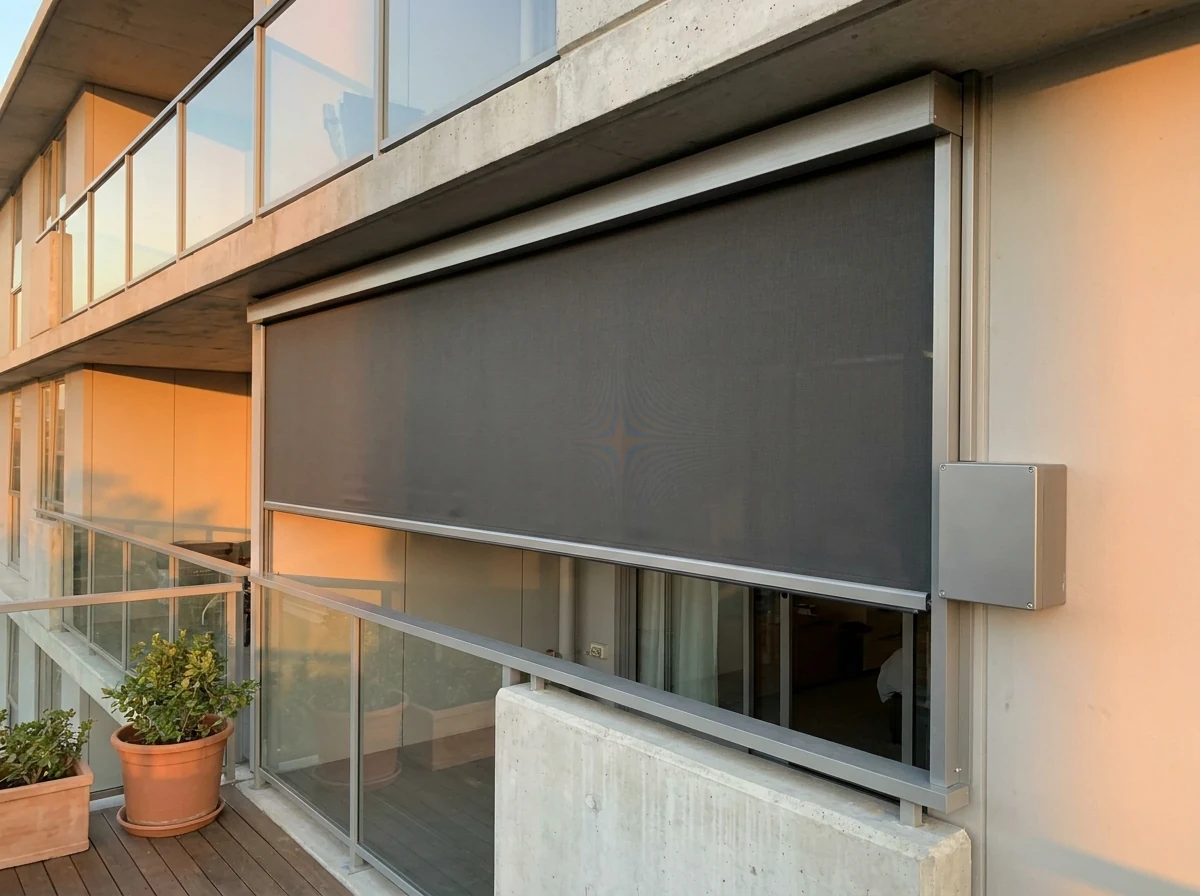
Zip screens
Wind-sensor retract for exposed balconies.
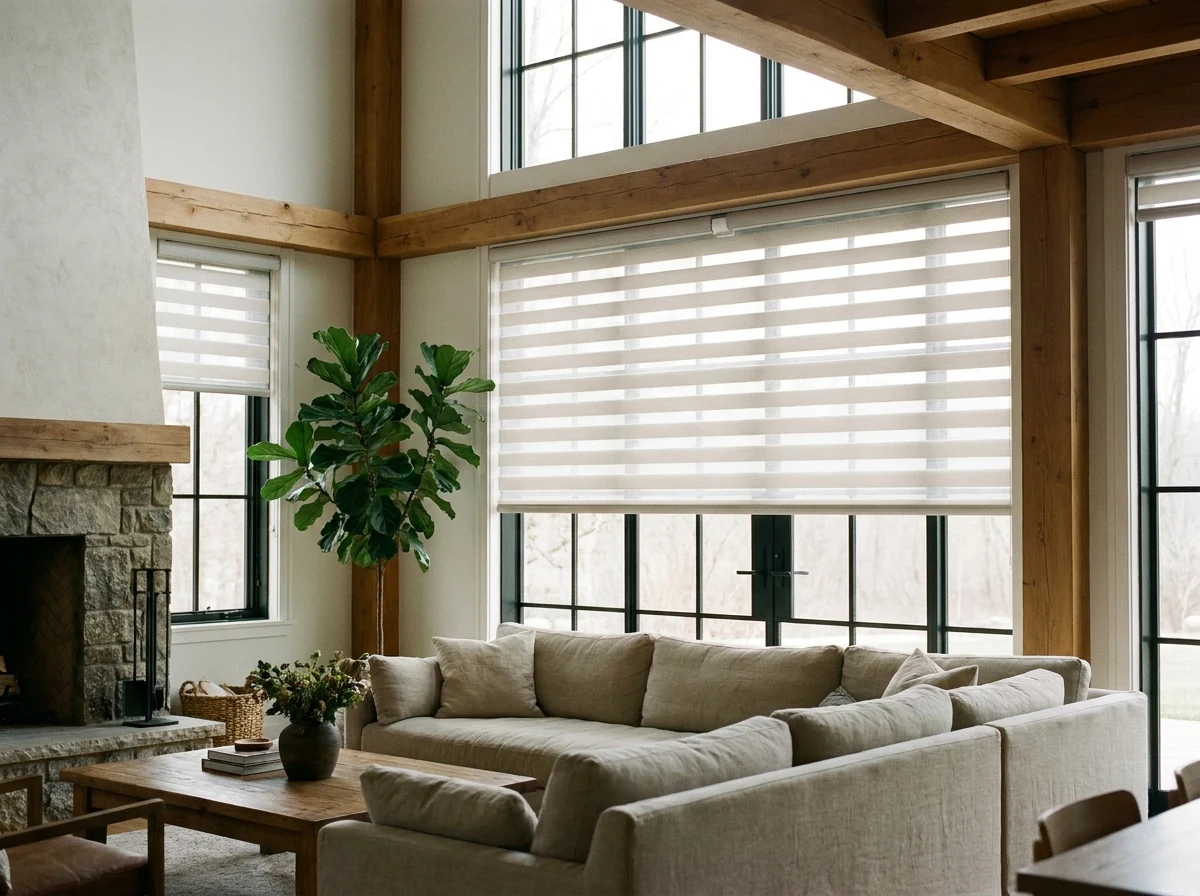
Day/night blinds
Schedule the bands to open with sunrise.
What motorised shading costs in Sandown
Automation has no flat rate, because the drive is attached to a blind, and the blind sets the number. Across this range it comes to roughly R2,500 to R7,500 per square metre installed. A motorised blockout or sunscreen roller sits at R2,500 to R3,800 per square metre; a motorised day/night blind at R2,800 to R4,000; a motorised balcony zip screen at R4,000 to R6,000.
Each of those figures already carries the drive, the handset or app and the setup visit. Rechargeable battery motors need no chase and no electrician, which is what makes automation realistic in a finished flat. Read them as a planning guide; they are not a quotation. A floor price applies to the small ones, since brackets, tube and fitting time hardly shift with the size of the pane. Every window in the flat is costed on its own at the measure and put in writing.